Identify what matters.
Review credible hazards, critical assets, business dependencies and potential consequences. Prioritize concerns affecting people, operations, property and information.
For companies, corporations and businesses
Connect a practical review of your facilities and operations with training designed around your people, priorities and budget.
A plan built around your operation
For offices, retail businesses, hospitality, warehouses, manufacturing facilities and organizations operating across multiple locations. Scope and availability are confirmed for each engagement.
Review credible hazards, critical assets, business dependencies and potential consequences. Prioritize concerns affecting people, operations, property and information.
Review entrances, visitor management, physical security, workplace violence reporting, emergency procedures, communications and continuity through authorized observation, interviews and records review.
Match instruction and exercises to the findings, employee roles and site conditions. Choose focused workshops, full courses or a staged training program.
Business safety and security planning
Every business has people to protect and activities that depend on staff, facilities, information, equipment and suppliers. A practical plan helps employees act when those resources are disrupted.
Identify credible events, who or what could be affected, and the likely consequences. Consider fire, severe weather, medical emergencies, workplace violence, utility failures, cyber disruption and supplier loss. Priorities should reflect your actual operation rather than a generic list.
Review the conditions that could increase harm: unclear responsibilities, inaccessible alerts, incomplete visitor procedures, untested backups, maintenance problems or a plan that does not cover every shift. Document evidence and uncertainty, then assign practical improvements.
Define who reports the incident, who may activate protective actions, how employees and visitors receive instructions, how people are accounted for, and how the business coordinates with responders. Include alternatives, accessible assistance, continuity arrangements and safe reopening criteria.
Employees need to practice their actual roles. Supervisors need backup authority and decision practice. Tabletop exercises and focused drills reveal whether messages, procedures and resources work together. Record corrective actions and verify the result.
Planning should address the credible incidents affecting your business and remain flexible for unfamiliar conditions. Scope and applicable requirements vary by location and industry. A general assessment does not replace specialist engineering, code, cybersecurity or regulated-sector reviews.
Further reading: Ready Business, OSHA emergency preparedness, and CISA facility assessment guidance.
NEW IN COLLECTION 06 · ETA-48
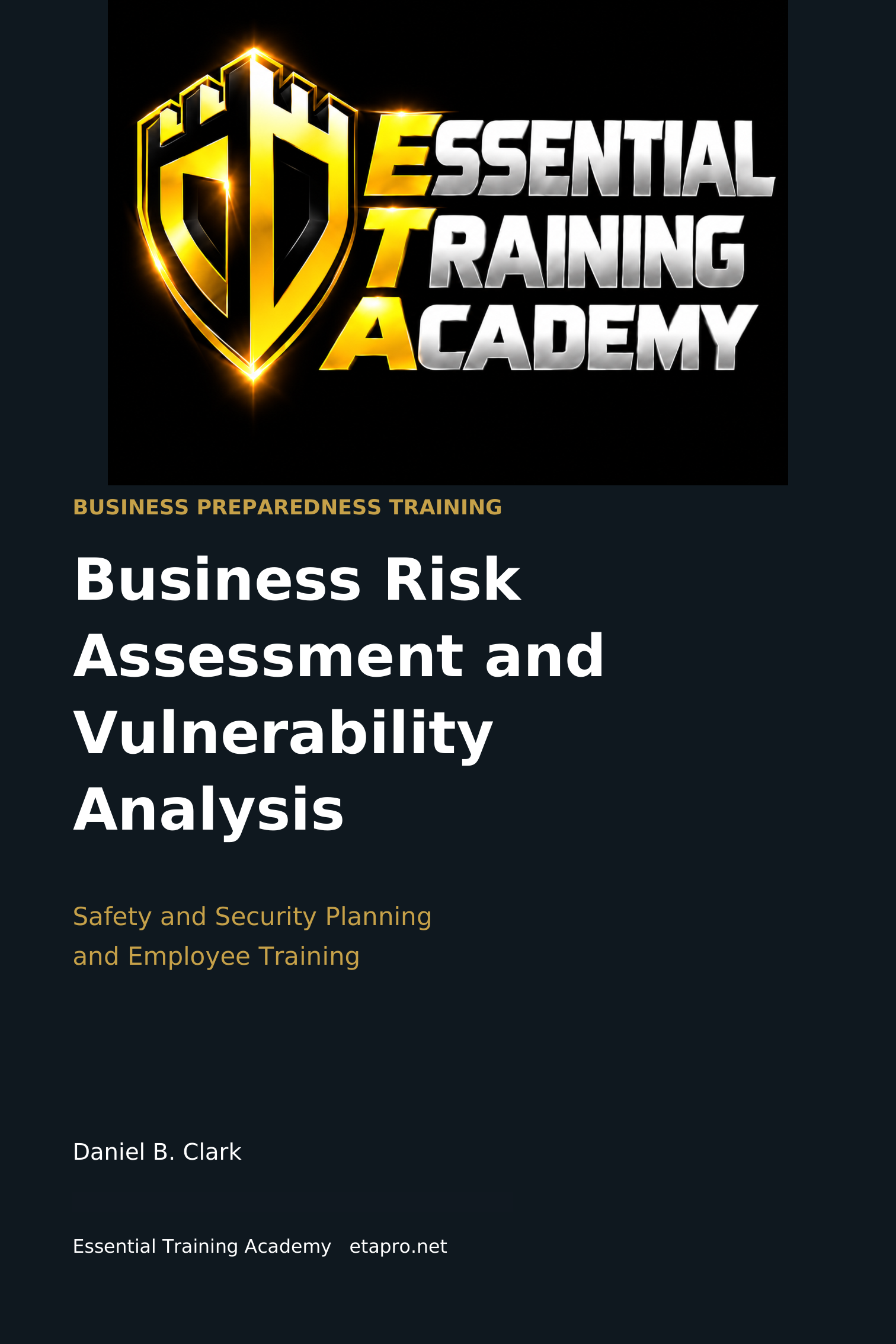
Business Risk Assessment and Vulnerability Analysis explains what to assess, why plans matter, and how training connects findings to action. Includes a worked business example and 22 companion forms.
Full workshop: 16 instructional hours.
Reduced awareness course: 4 instructional hours.
Instructor materials include separate full and reduced outlines and PowerPoints, presenter notes, an instructor guide, knowledge checks, and editable and fillable forms.
Your assessment engagement
Start with a scoping discussion, then agree on sites, access, records, deliverables and schedule. ETA reviews the agreed areas and discusses findings with your leadership.
Your agreed package can include an assessment summary, prioritized risk register, corrective-action plan, role-specific training recommendations and a follow-up review.
On-site visits, document review and facilitated discussions can be combined. Multi-site programs and continuing support are quoted individually.
Get specific course recommendations ↗
Training scope, prerequisites, hours, materials and any course credit are confirmed in writing.
Address one facility or a specific concern and establish the next priorities.
Combine a broader review with targeted instruction for employees, supervisors or security staff.
Use a consistent review approach across locations, with site-specific actions and training.
Assessment services are quoted based on site size, complexity, travel, records review and deliverables. Technical cybersecurity testing, engineering and code inspections require separately scoped qualified specialists.
Start a conversation
For a complete planning brief, use the guided intake covering sites, readiness, training, scope and logistics.
Open detailed client intake ↗Provide general goals here. Detailed security findings, access codes and sensitive records should be shared only through a separately agreed secure process.
Business inquiries: danny@etapro.net
Submit this form to record your request for ETA review. You will receive an on-screen reference number and can download your confirmation. Email notifications are not connected on this website.